Project 04 — 2026
Wedge
A design-system conformance linter — and the product, brand, and story I built around it.
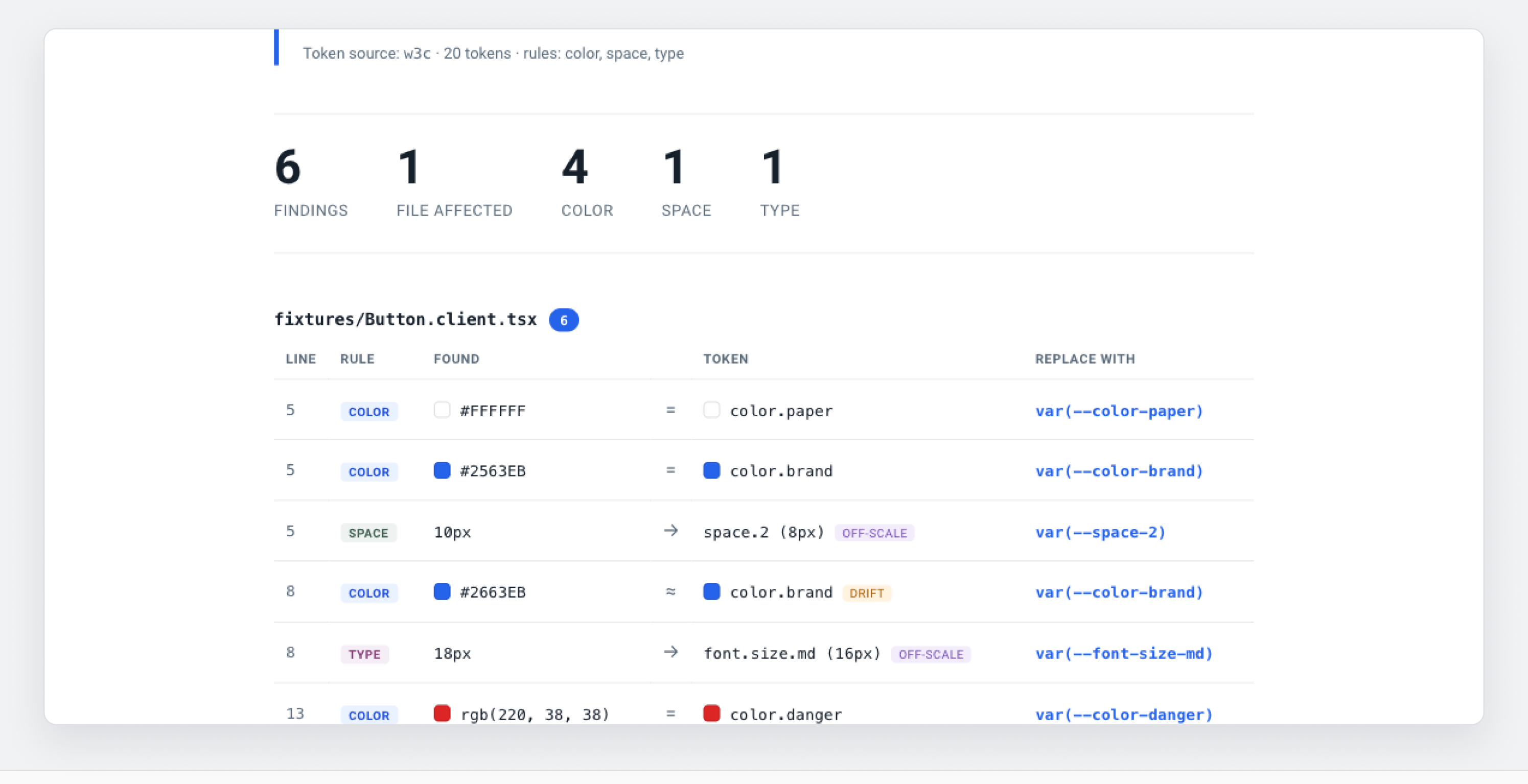
Wedge is a tool I designed and built: it scans a codebase for design-system drift — hard-coded colors, off-scale spacing, ad-hoc type — and reports it everywhere teams already look, from the terminal to the pull request. I owned the whole thing: the engine, the identity, and the pitch.
The identity, built alongside the engine — one mark, one accent, one wordmark.
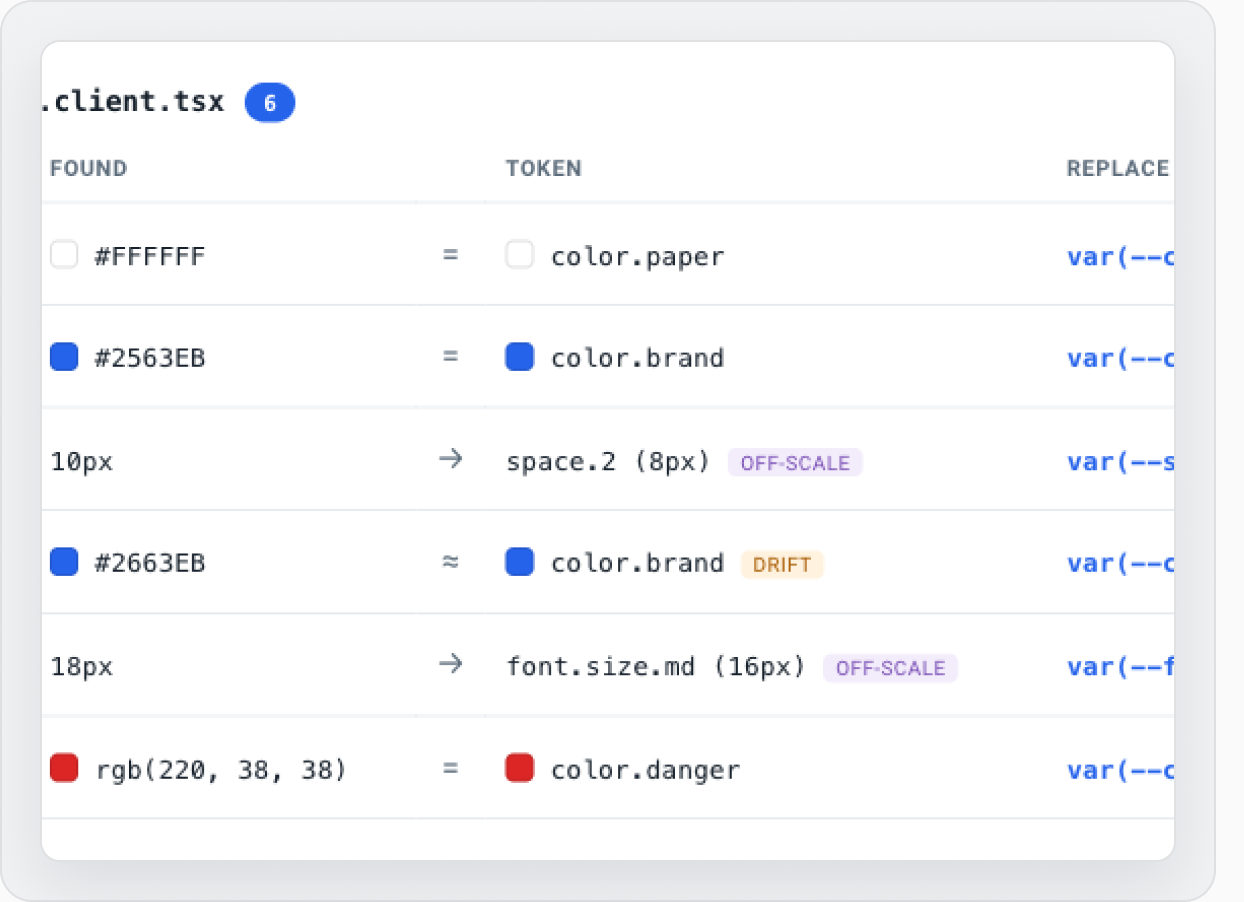
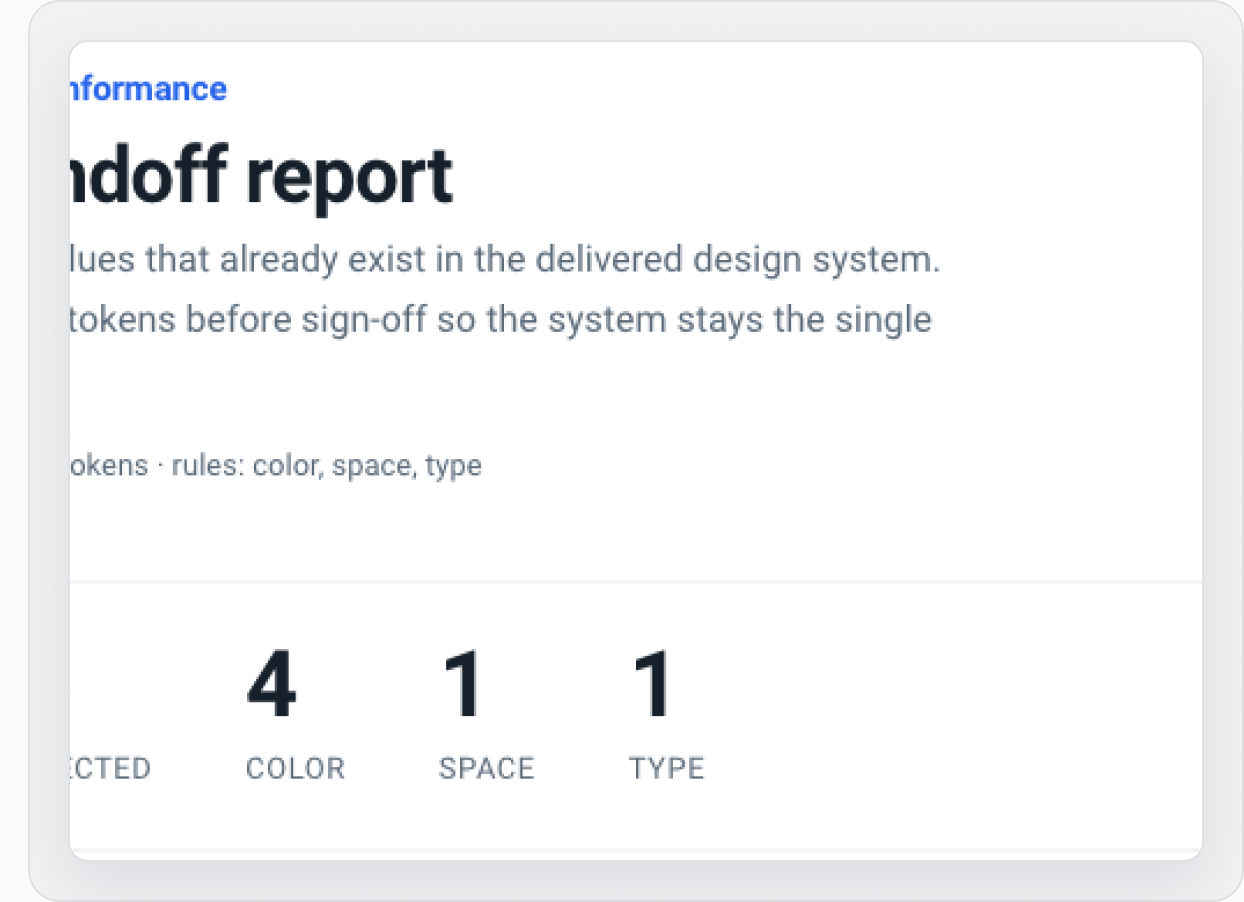
Fig. 01 — Report
The drift report — conformance made legible across surfaces.
The problem
Design systems decay silently. A token gets bypassed here, a spacing value hard-coded there, and six months later the system no longer describes the product. Nobody notices until it’s expensive to fix.
The approach
Wedge treats conformance as a measurable, trackable thing. It pulls your tokens from any source — including live Figma Variables — scans the code, and quantifies the drift against a budget you set.
Then it meets people where they work: a terminal summary, an inline PR comment, an HTML dashboard, a PDF for stakeholders. Same truth on every surface — so drift becomes a number a team can actually manage.
“You can’t hold a design system together with good intentions. You hold it together with a number that goes up when it breaks.”