Project 02 — 2019 / Present
Cellares
Founding design for an automated cell-therapy manufacturer — the brand, the design system, and the operator software that runs the Cell Shuttle.
Cellares builds the Cell Shuttle — a factory-in-a-box that automates cell-therapy manufacturing. I’ve been their designer since the beginning: I built the brand from zero, grew the design system, and designed the operator software that runs the machines — from the floor dashboards to the batch records that prove every run to regulators.
The brand I built from zero — one mark, one blue, and the system that grew out of it.



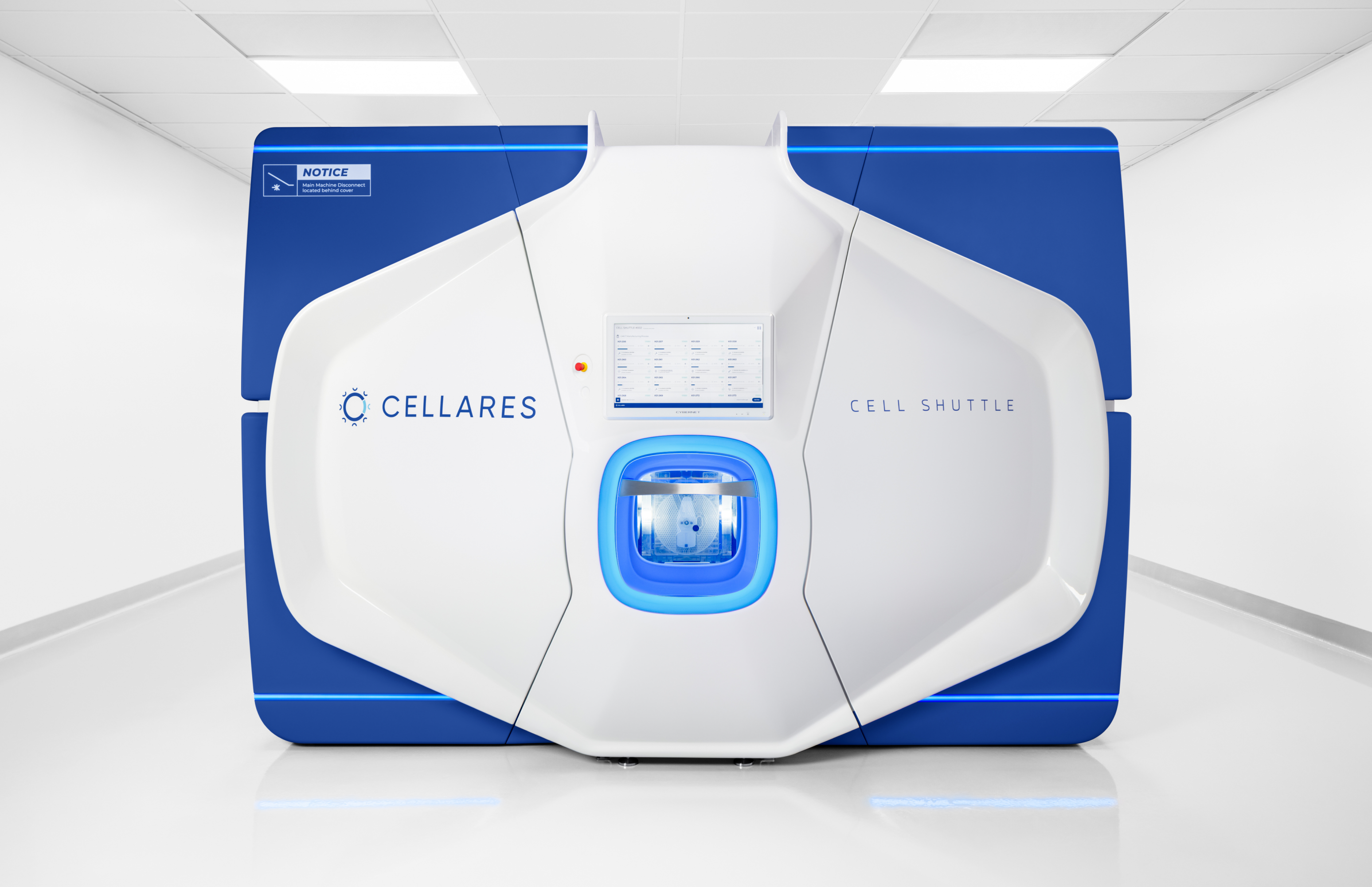
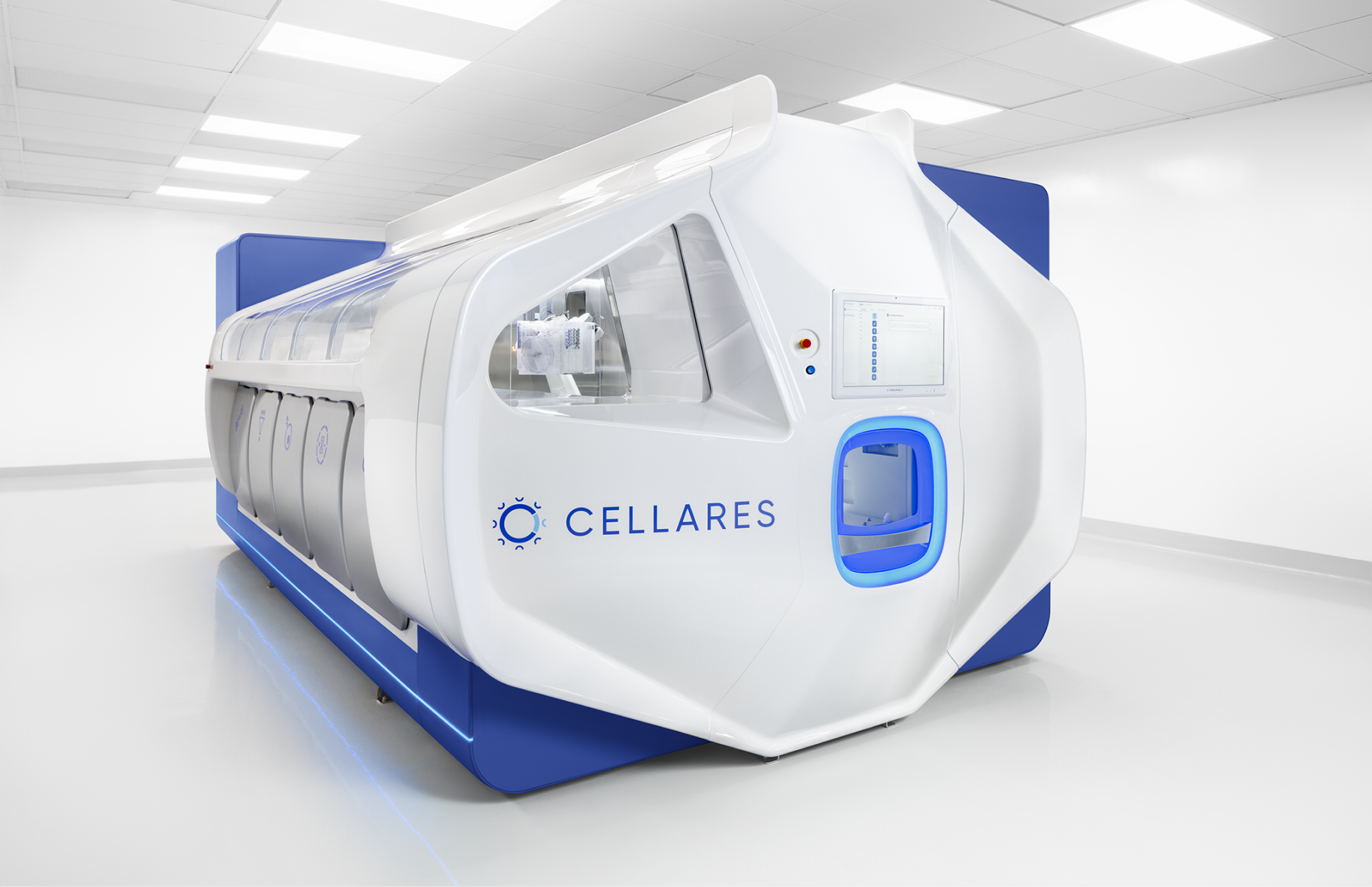
The brand, on the machine
The Cell Shuttle carries the same blue as the logo. I chose how that color is applied to the hardware — carrying the identity from the screen to the factory floor.
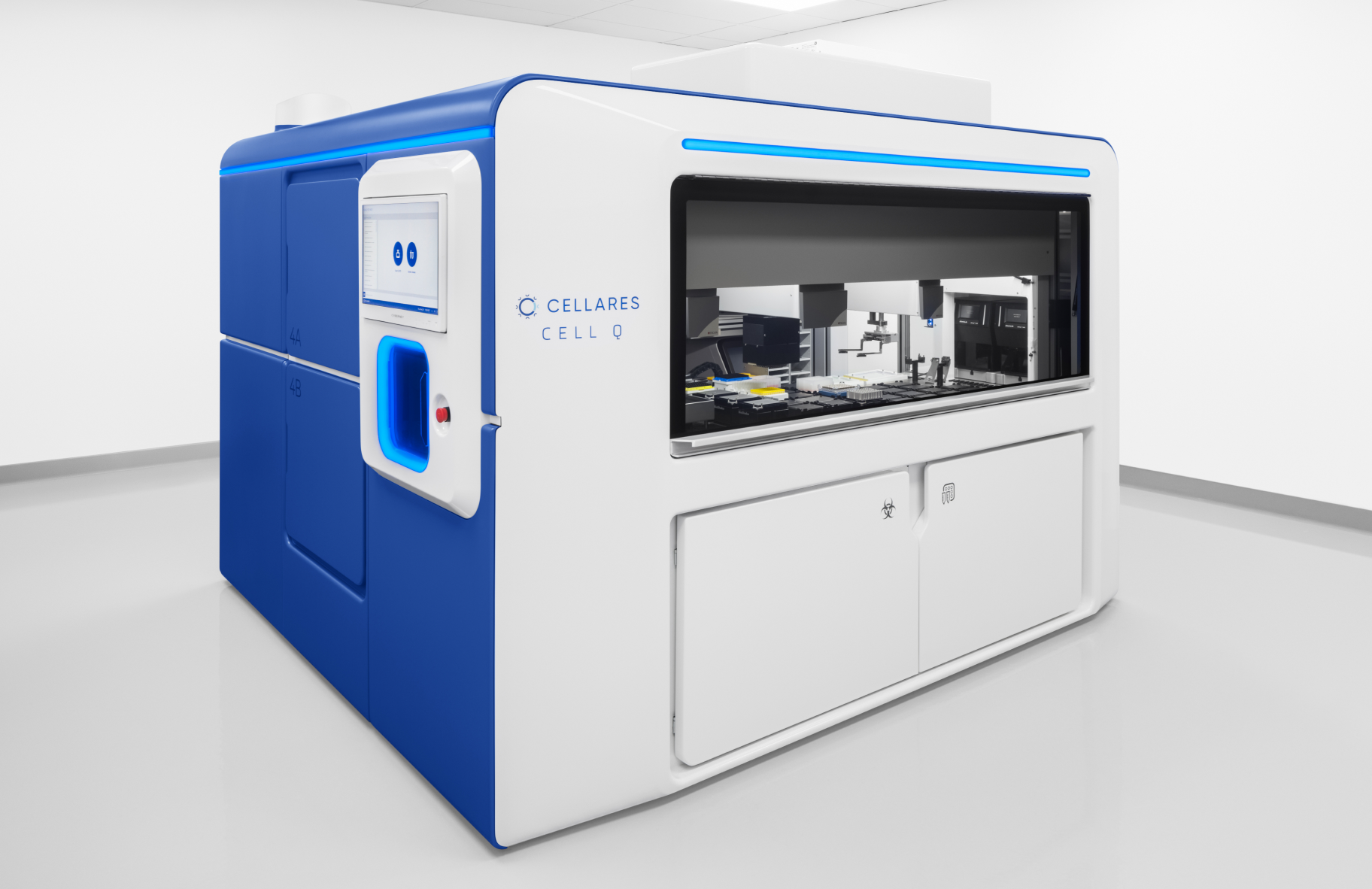
The operator software for the Cell Shuttle — two surfaces: one on the instrument for the people running it, one remote for the people overseeing it.
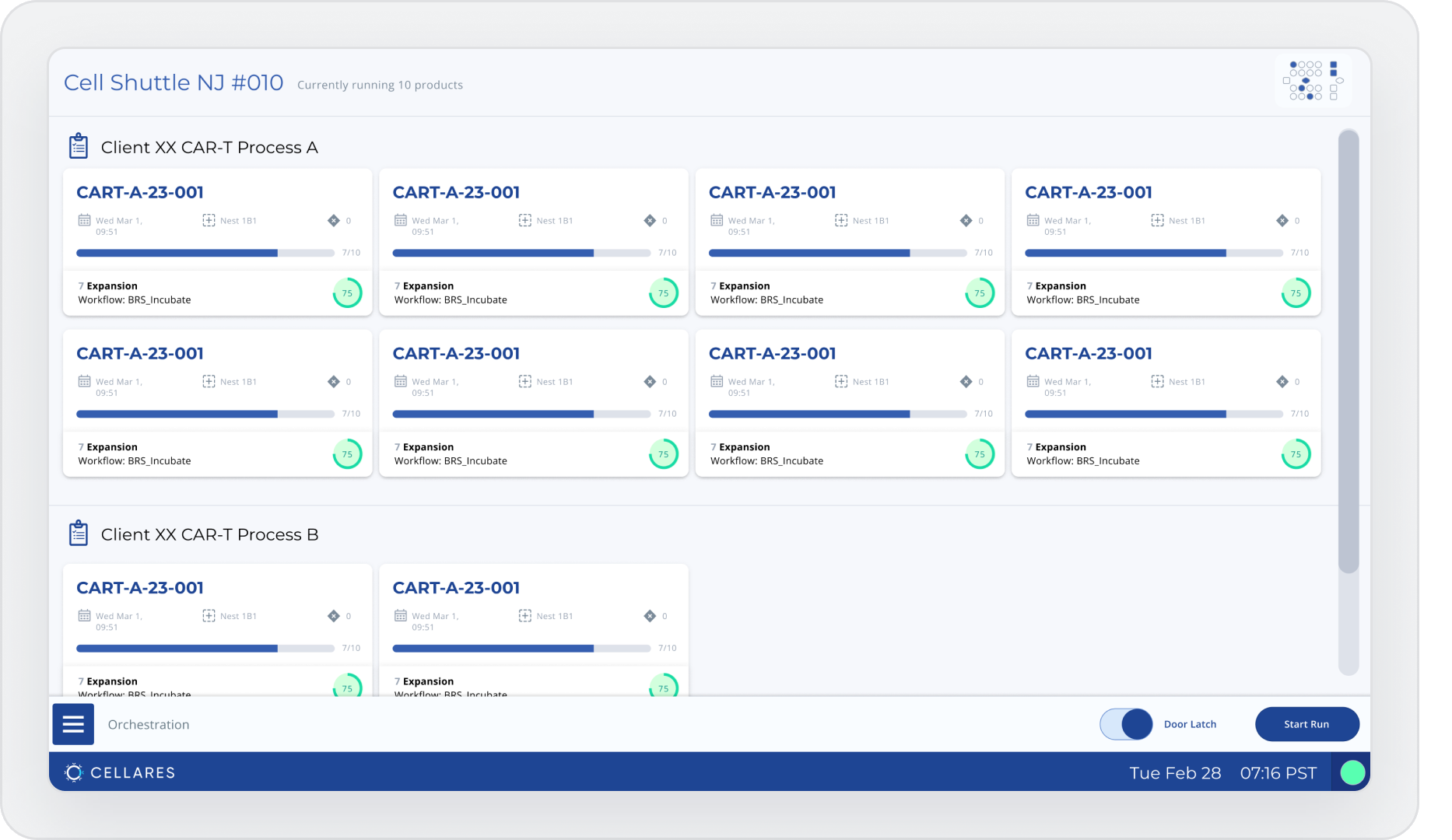
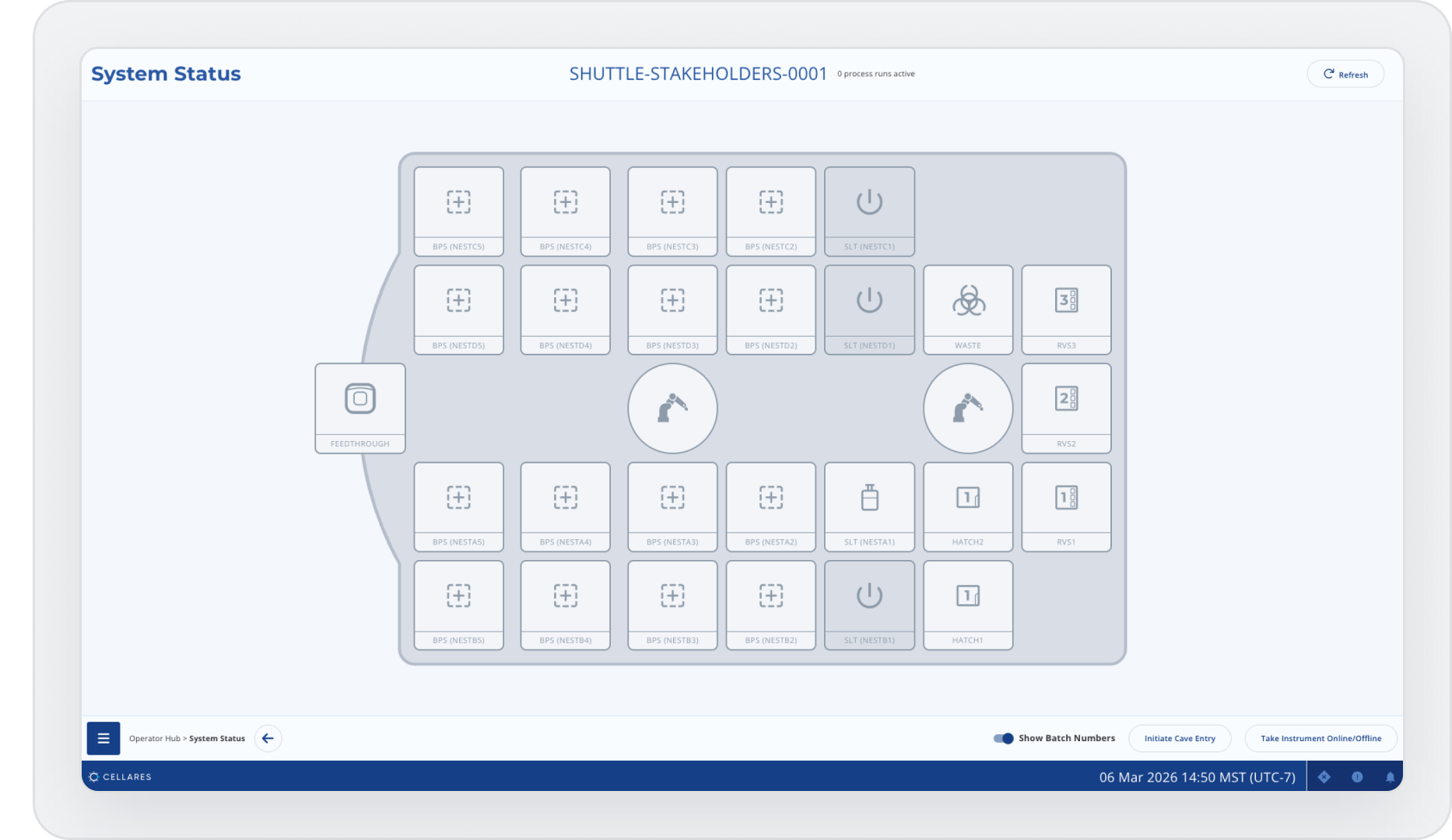
On-device · touch panel
Instrument software
Runs on the Cell Shuttle itself — a touch panel at eye level, operated gloved and gowned inside the clean room.
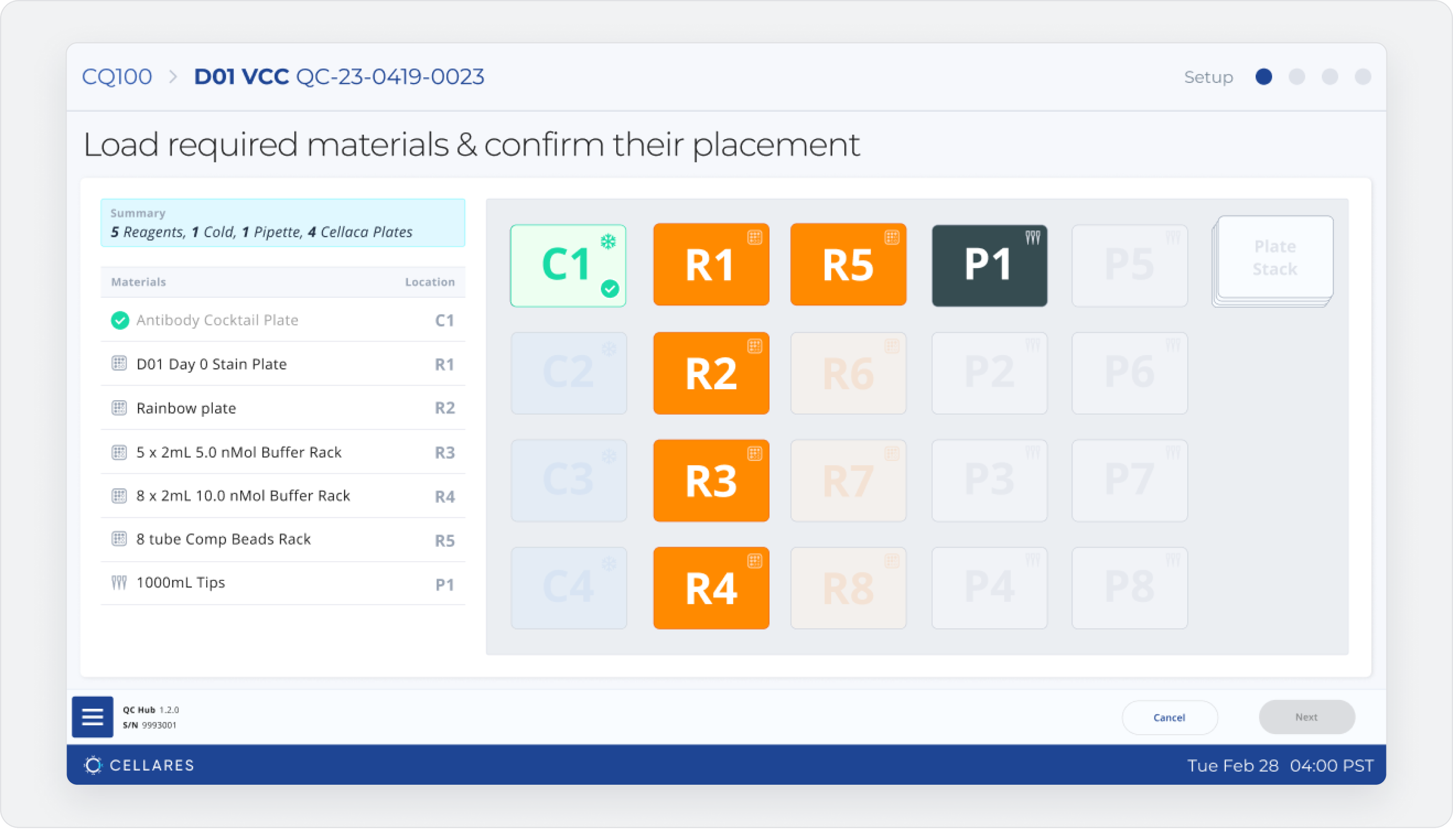
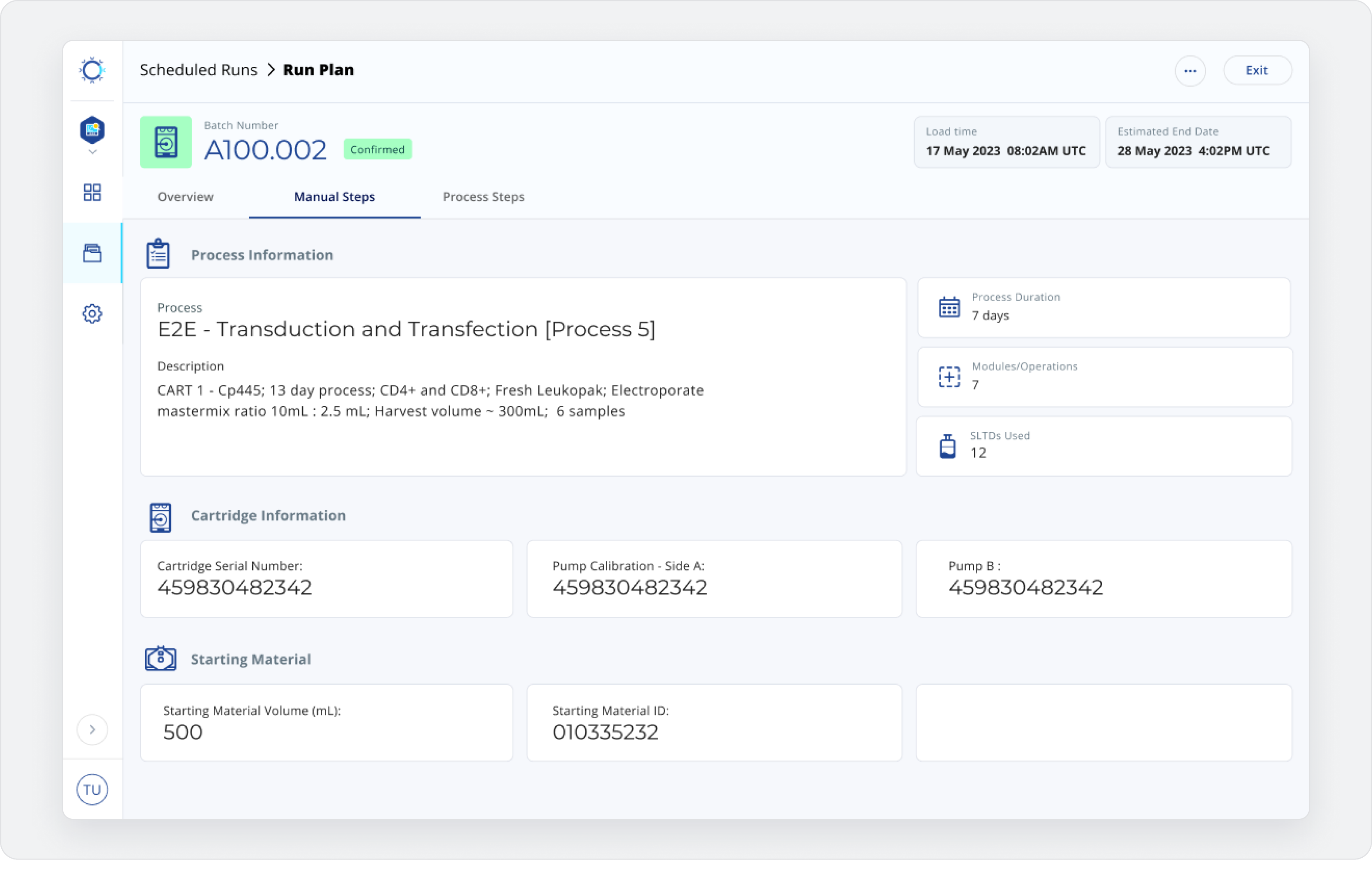
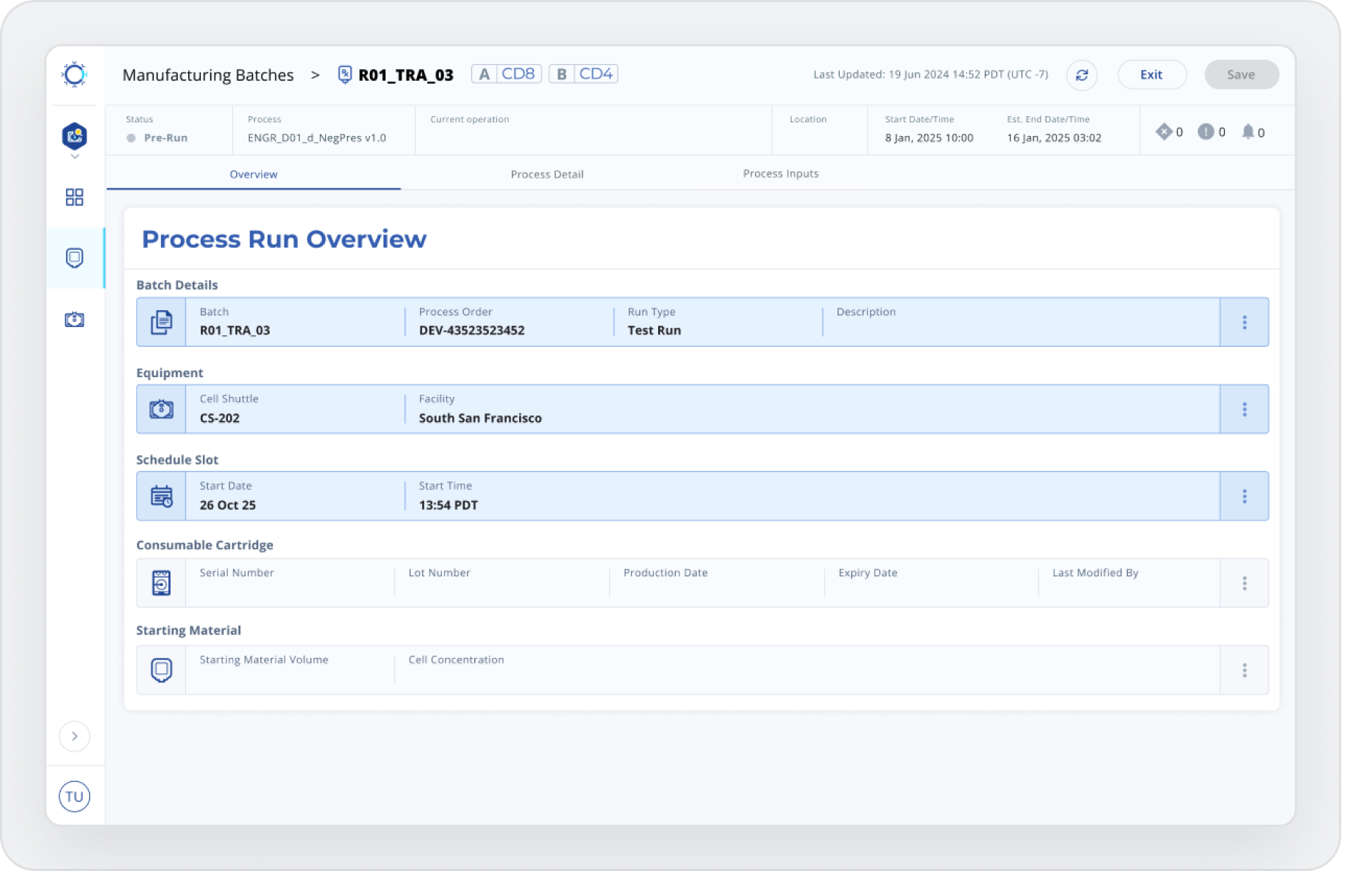
Remote · desktop
Remote software
Runs anywhere but the floor — for supervisors watching runs, inventory, and batches from a desk, away from the machine.
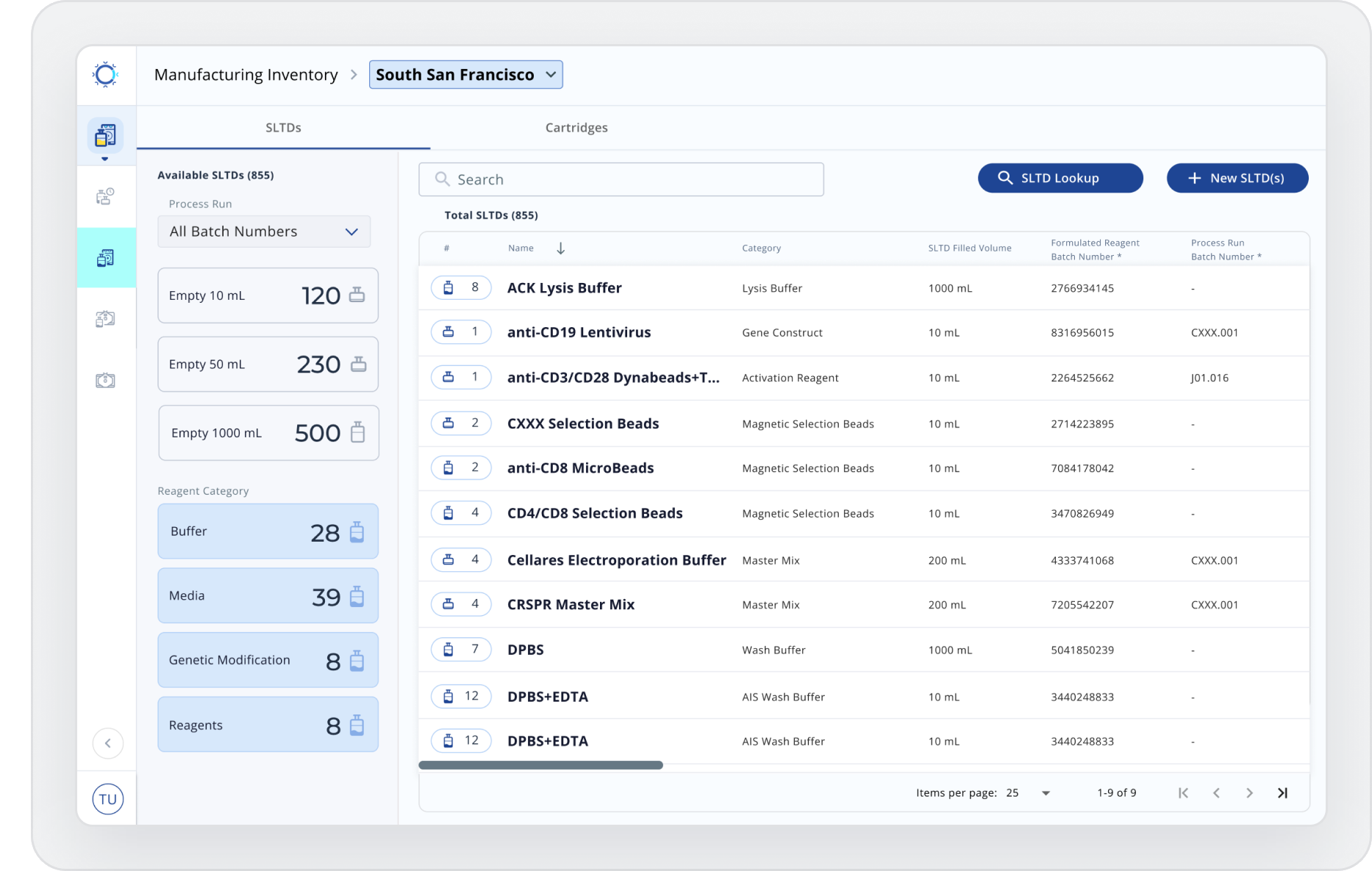
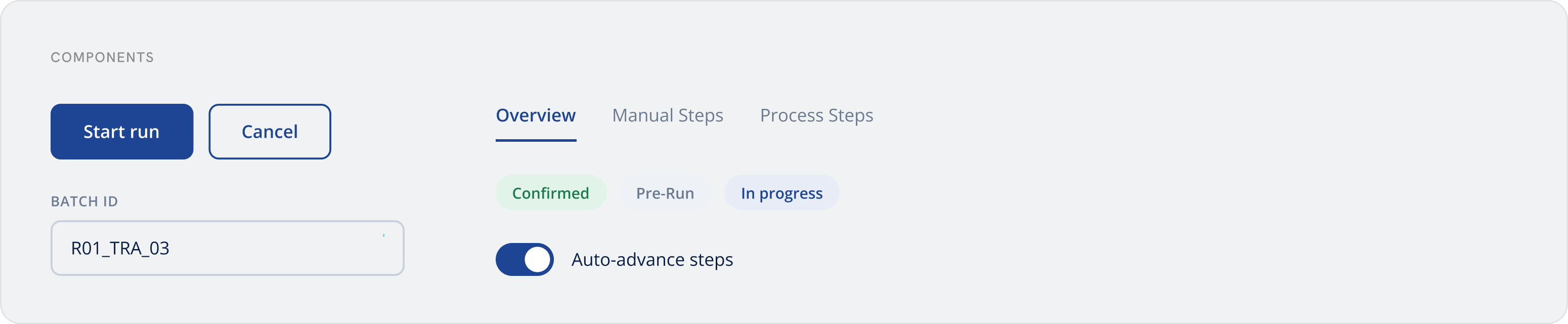
The tokens, type, and interface components behind a safety-critical product — built to stay legible when it matters most.
Montserrat / Open Sans
Geometric display, humanist body — clinical but not cold.
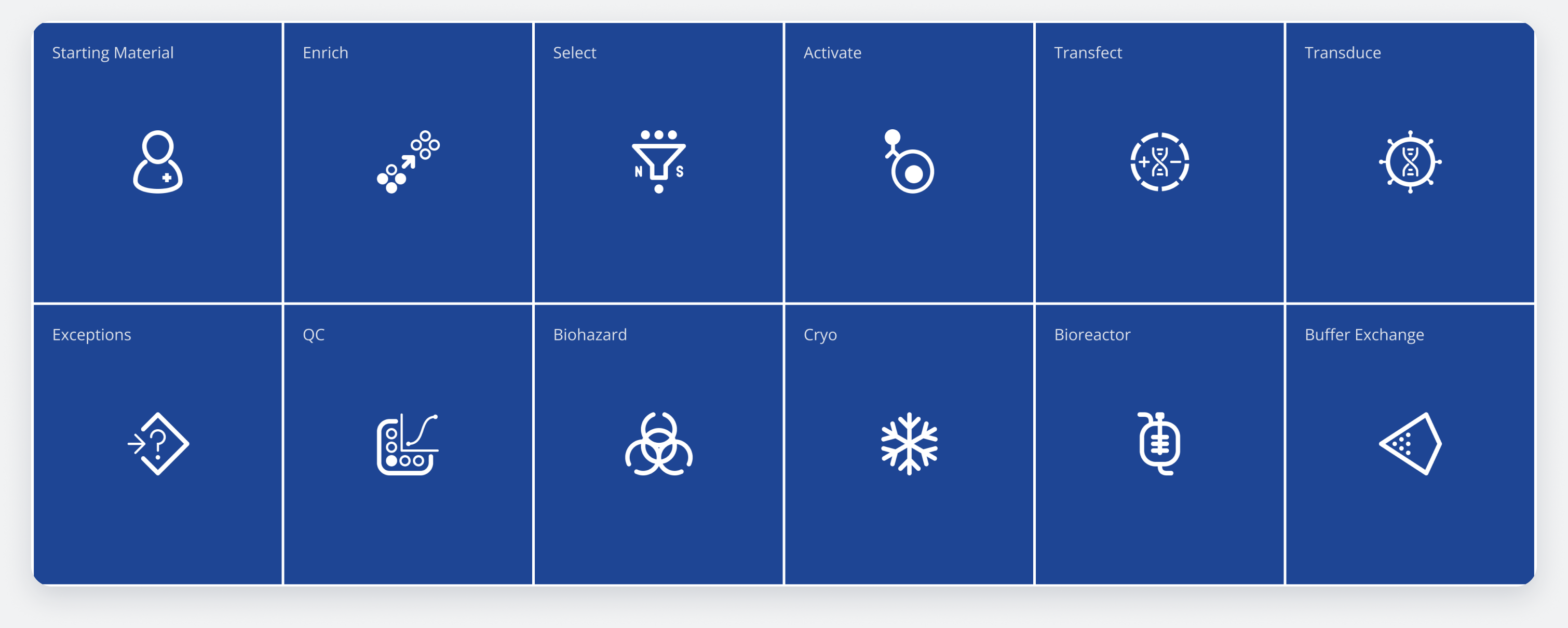
Icon set — a custom language for cell-therapy manufacturing
The problem
A cell therapy is made for one patient from their own cells — there is no second batch. Operators must see the state of every run instantly and act on anything abnormal before it compromises a dose, across a floor of machines running around the clock.
The approach
I designed for the glance first. Status reads from across the room, detail is one tap away, and the interface never makes an operator hunt for whether something is wrong.
Deviations get their own workspace — capture, investigate, and route to QA in one place — and every action flows into a batch record that is audit-ready by construction, not assembled after the fact.
“In manufacturing the interface isn’t decoration — it’s the difference between a delivered therapy and a lost one.”